Suspension training, often viewed as the reserve of elite athletes, has far broader applications than one might initially presume. Whether you are a gym novice or a seasoned competitor, this versatile training modality has the potential to dramatically impact your fitness journey. Let’s delve into how suspension training can be meticulously tailored to meet a multitude of individual fitness objectives, from augmenting balance and stability to facilitating injury rehabilitation.
Unveiling the Dynamics of Suspension Training
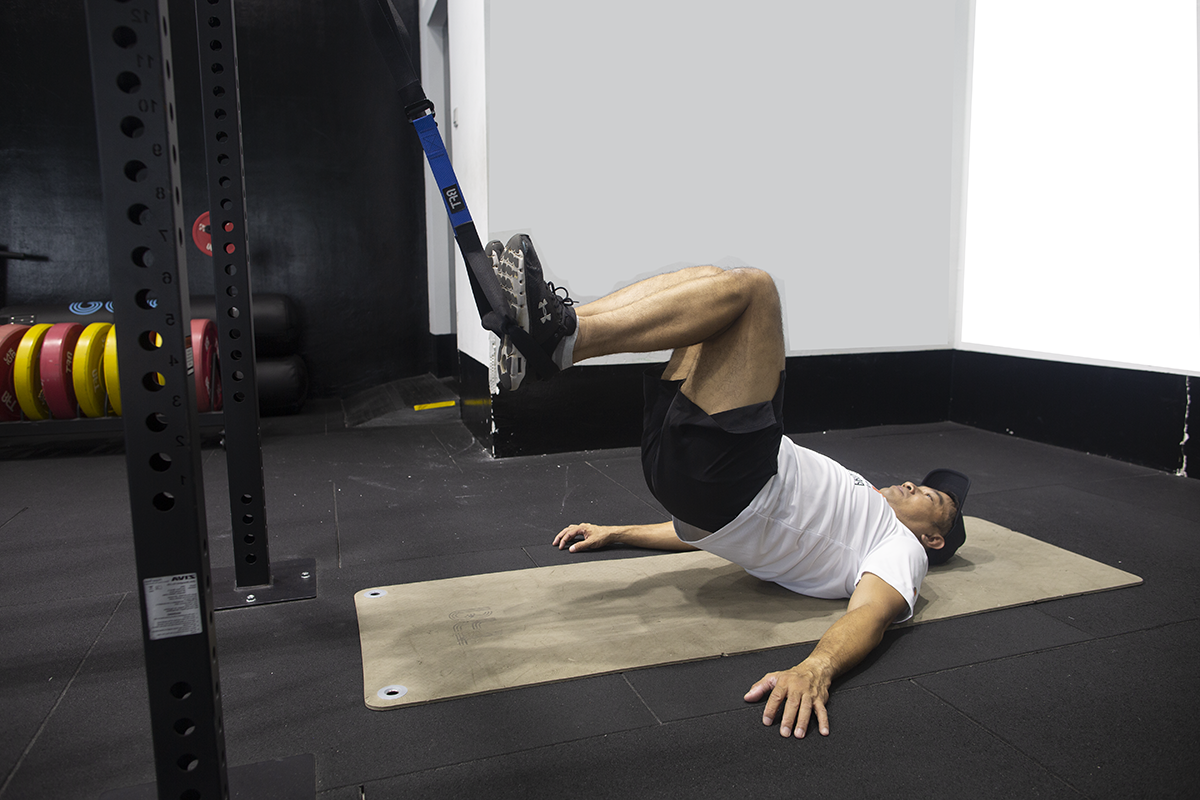
Fundamentally, suspension training is anchored in utilizing body weight and gravitational force. Attached to sturdy overhead anchors, the system deploys a set of straps that you control using your hands or feet. The angle of your body against the straps manipulates the resistance and targets different muscle groups (Dawes, 2019). Importantly, due to the precarious nature of the setup, your core is perpetually engaged, enhancing balance and posture (Beach, Howarth, & Callaghan, 2008).
One Size Does Not Fit All: The Malleability of Suspension Training
It’s the inherent adaptability of suspension training that makes it so universally appealing. You can tweak your workout’s intensity, complexity, and focus by merely altering your body’s position, the length of the straps, or the choice of exercises.
Real-Life Scenarios: More than Just Anecdotes
Enhancing Balance and Stability
A study comprising individuals of various age groups demonstrated that eight weeks of suspension training markedly enhanced participants’ balance, which is a crucial asset in averting falls (Byrne, Bishop, & Caines, 2014). Consider Sarah, a 50-year-old woman, who turned to suspension training to improve her stability and avoid tripping, a problem that had been troubling her. By focusing on single-leg exercises, she was able to cultivate better control over her balance within just a few weeks.
Strength and Muscle Development
Suspension training has been found to improve muscular endurance, with additional benefits for core stability (Furlong, 2013). Mark, a bodybuilder, incorporated suspension training into his routine to better target his core and upper-body stabilizing muscles, thereby enhancing his performance during weightlifting competitions.
Rehabilitation
Suspension training has been used in physiotherapy settings to promote functional recovery (Boyle, Garside, & Gill, 2010). For instance, Emily, who was recovering from a severe shoulder injury, used this modality as a low-impact alternative to accelerate her rehabilitation process.
Bespoke Programs: A Stitch in Time
The key to effectively leveraging suspension training lies in personalizing the regimen. Here’s how:
1. Comprehensive Assessment
Before embarking on any fitness journey, a thorough evaluation helps pinpoint strengths and weaknesses, assisting in program design.
2. Gradual Progression
Begin with elementary movements, and as your familiarity and confidence grow, expand your repertoire to include more advanced exercises.
3. Intensity and Frequency
Frequency and intensity should be adjusted according to your individual goals. More repetitions and less resistance are appropriate for endurance training, while the opposite holds true for strength training.
Whether you’re angling for increased muscle tone, functional rehabilitation, or superior athletic performance, suspension training offers a customizable solution. Its in-built versatility not only democratizes access to effective fitness but also ensures that individual goals are met with surgical precision.
References
- Dawes, J. (2019). Developing the Core. Strength and Conditioning Journal, 41(3), 70-81.
- Beach, T. A., Howarth, S. J., & Callaghan, J. P. (2008). Muscular contribution to low-back loading and stiffness during standard and suspended push-ups. Human Movement Science, 27(3), 457-472.
- Byrne, J. M., Bishop, N. S., & Caines, A. M. (2014). Effect of using a suspension training system on muscle activation during the performance of a front plank exercise. Journal of Strength and Conditioning Research, 28(11), 3049-3055.
- Furlong, B. (2013). The effects of six weeks TRX suspension training program on isometric muscle endurance. Journal of Fitness Research, 2(2), 35-43.
- Boyle, J., Garside, I., & Gill, N. (2010). Effects of experimental leg length discrepancies on body posture and dental occlusion. The Journal of the Canadian Chiropractic Association, 54(2), 86.